Sustainability
Conformité des emballages durables en 2026 : PPWR, REP et ce que l’acheteur doit documenter
Ce que le règlement européen sur les emballages exige réellement des importateurs, et les documents à réclamer à votre fournisseur.
Compliance Team9 min read
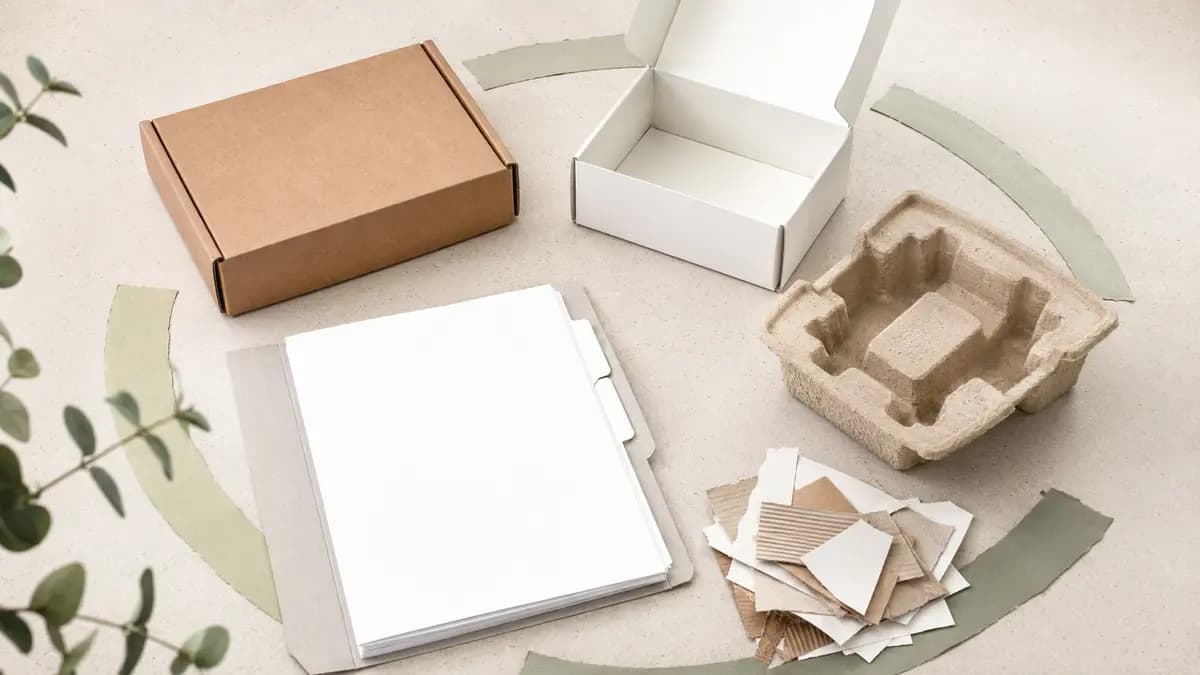
La durabilité des emballages est passée de l’argument marketing à l’obligation légale. Si vous importez dans l’Union européenne ou au Royaume-Uni, votre emballage a désormais besoin de documents, pas d’adjectifs.
Cet article expose ce qui est demandé en pratique, et les pièces précises à exiger de tout fournisseur d’emballage avant de passer commande.
La recyclabilité s’évalue par la conception, pas par l’intention
Les autorités évaluent si un emballage peut être recyclé à grande échelle dans les infrastructures existantes — et non s’il est théoriquement recyclable. Une boîte en carton pelliculée de film plastique échoue généralement à ce test, même si les deux matériaux sont individuellement recyclables.
La conséquence pratique est le passage au mono-matériau : carton avec vernis à l’eau, ruban papier au lieu du polyester, fermetures papier au lieu de clips plastique.
Documents à exiger de votre fournisseur
Demandez-les au stade du devis, pas après la production. Un fournisseur incapable de les produire pour une commande d’échantillons ne les produira pas davantage pour une expédition.
- Certificat de chaîne de contrôle FSC ou PEFC, valide et couvrant votre commande
- Pourcentage de contenu recyclé en poids, par composant
- Déclaration de composition listant chaque substance, vernis et adhésifs compris
- Déclaration de conformité au contact alimentaire le cas échéant (UE 1935/2004, FDA)
- Attestation d’absence de PFAS pour tout carton barrière anti-gras
- Évaluation de recyclabilité au regard des infrastructures de tri du marché de destination
La réalité des coûts
Les constructions mono-matériau ne sont pas automatiquement plus chères. Supprimer le pelliculage supprime une étape de production ; le vernis à l’eau coûte moins cher que le film. Le surcoût apparaît sur les calages sans plastique, la pulpe moulée exigeant un outillage dont la découpe EVA se passe.
Sur les programmes que nous avons convertis ces deux dernières années, l’effet net typique s’est situé entre 3 % d’économie et 8 % d’augmentation, l’augmentation se concentrant sur les emballages d’électronique et de verrerie riches en calage.
Par où commencer si vous êtes en retard
Auditez d’abord vos dix références les plus vendues : elles portent l’essentiel de votre exposition aux écocontributions REP. Remplacez le pelliculage par un vernis à l’eau, échangez le ruban polyester contre du papier et faites certifier le carton FSC. Ces trois changements font généralement passer une boîte de l’échec à la réussite au criblage de recyclabilité, sans aucune refonte structurelle.