Materials
How to Choose the Right Packaging Box Material: A Buyer's Guide
Greyboard, SBS, kraft or corrugated? A practical framework for matching board type to product weight, shelf life and budget.
Packaging Engineering Team8 min read
Material choice drives roughly 60% of a packaging box's unit cost and almost all of its performance. Get it wrong and you either overpay on every unit for the life of the SKU, or you pay in damage claims.
This guide walks through the four board families we quote most often, what each is genuinely good at, and the questions to answer before asking any supplier for a price.
Start with product weight and fragility, not appearance
The most common specification error is choosing a board because of how a competitor's box looks, then discovering it cannot carry the product. Weigh your product with all accessories, then note the drop height it must survive — a parcel handled by a courier network sees 90 cm drops routinely.
Only once weight and fragility are fixed does it make sense to talk about finish. Finish can be applied to almost any board; load capacity cannot be added afterwards.
The four board families
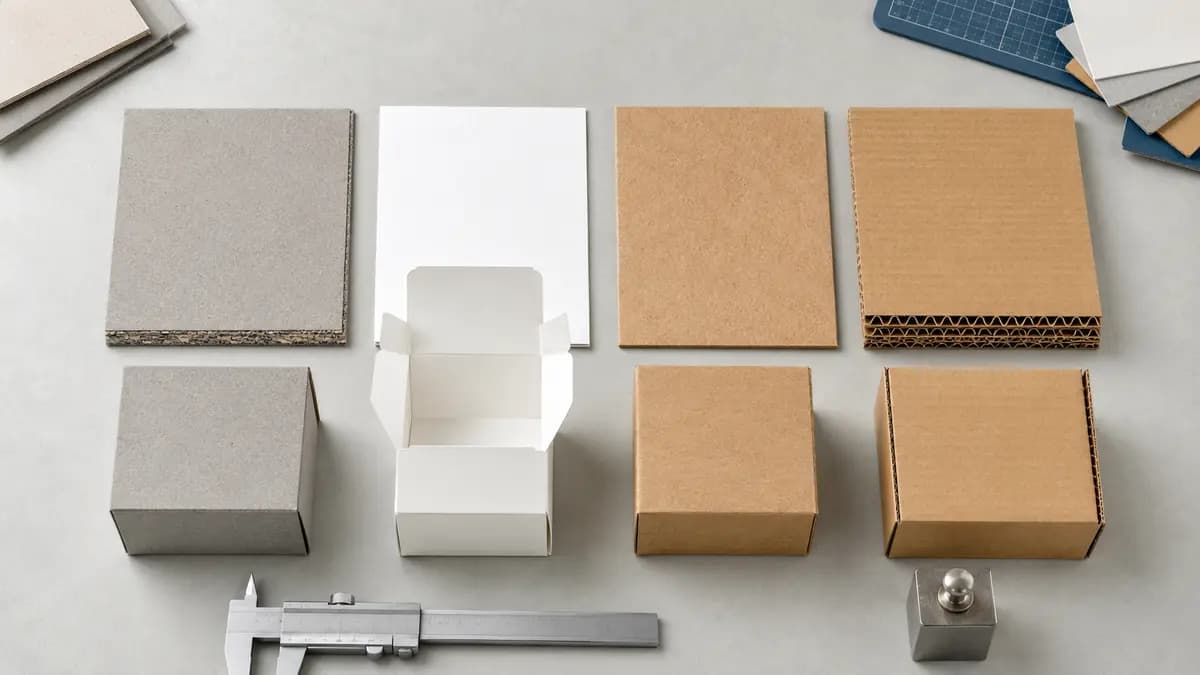
Nearly every paper-based packaging box is built from one of four material families, and they are not interchangeable.
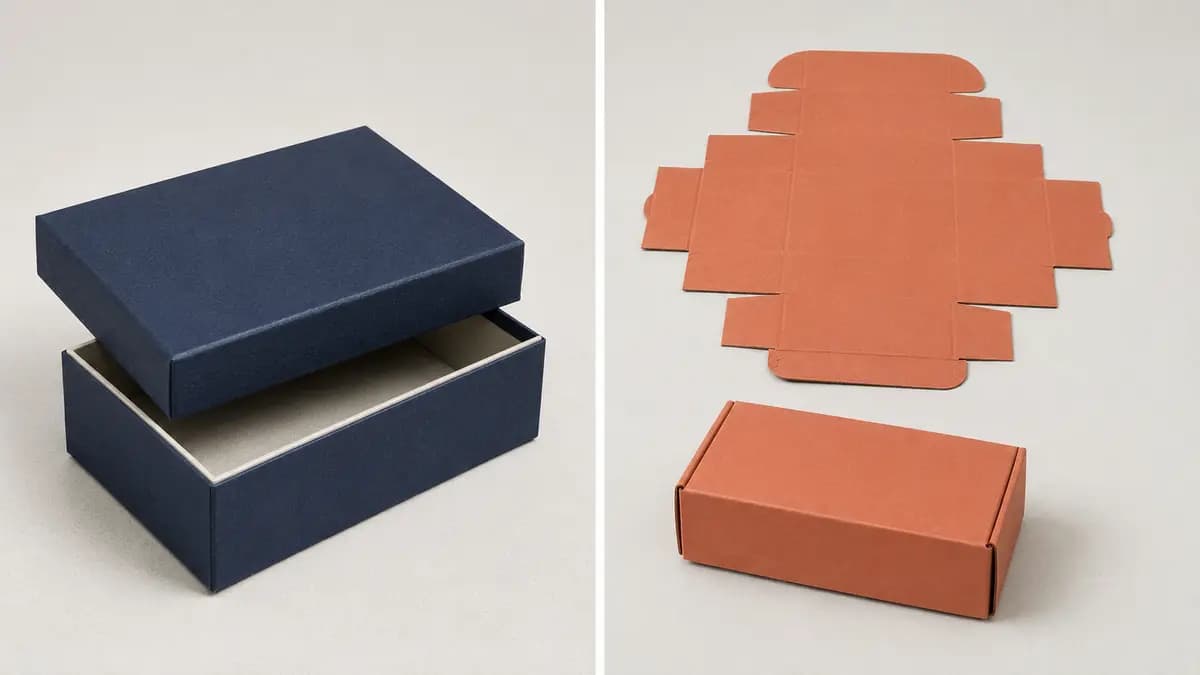
- Greyboard (1,000–2,500 gsm): rigid, permanent shape, wrapped in printed paper. Premium gift and jewelry boxes. Highest unit cost, highest perceived value.
- SBS folding board (250–450 gsm): printed flat, die-cut and glued. Retail cartons for cosmetics, food and pharma. Best print quality per unit cost.
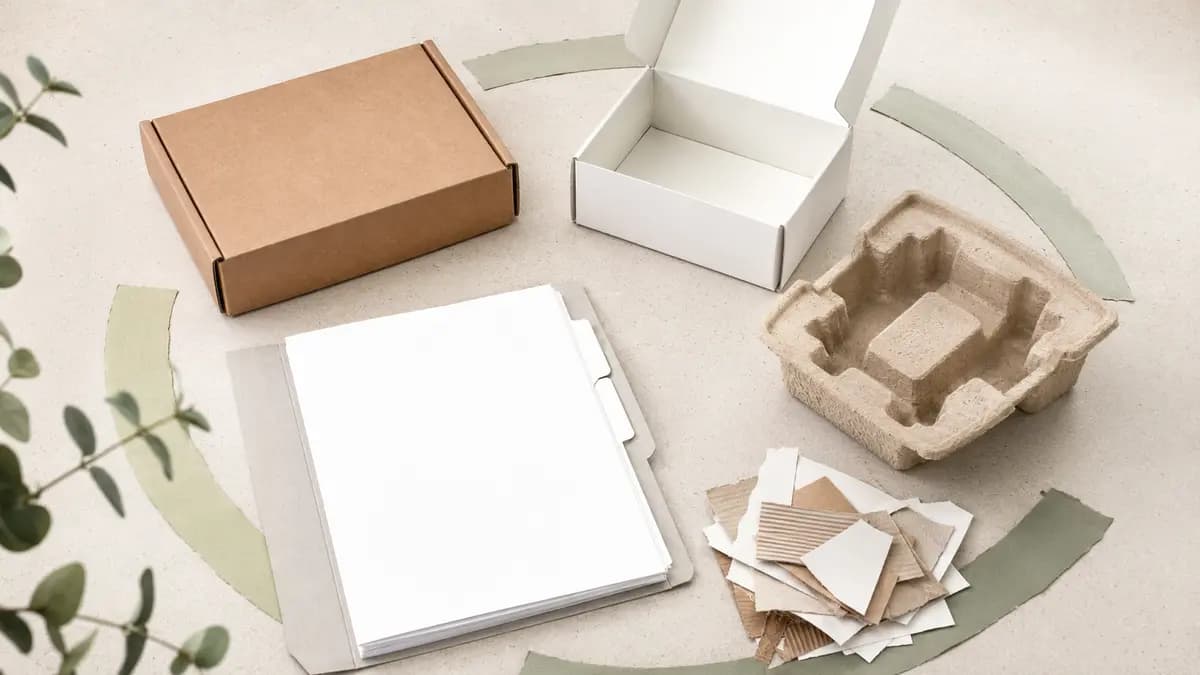
- Kraft board (250–450 gsm): recycled or virgin brown board. Visible sustainability cue, slightly lower print fidelity, strong at the price.
- Corrugated (E, B, C, BC flute): fluted core between liners. Shipping and e-commerce. Best strength-to-weight ratio by a wide margin.
Where buyers overspend
One avoidable cost is specifying a heavier corrugated grade than the packed product and distribution route require. Compare candidate structures against the actual stack, humidity and handling requirements before changing the board grade.
The second is using rigid greyboard where a well-finished folding carton would read the same on shelf. A soft-touch laminated 400 gsm carton with foil stamping frequently outperforms a plain rigid box in consumer testing, at a third of the cost and a fraction of the freight.
Questions to answer before requesting a quote
A supplier can only give you a meaningful price against a defined brief. Have these five answers ready and your first quote will be close to your final one.
- Product dimensions and gross weight, including accessories
- Annual volume and per-order volume — these price very differently
- Retail shelf, e-commerce parcel, or both
- Required certifications: FSC, food contact, recyclability declarations
- Target landed cost per unit, not just ex-works box price